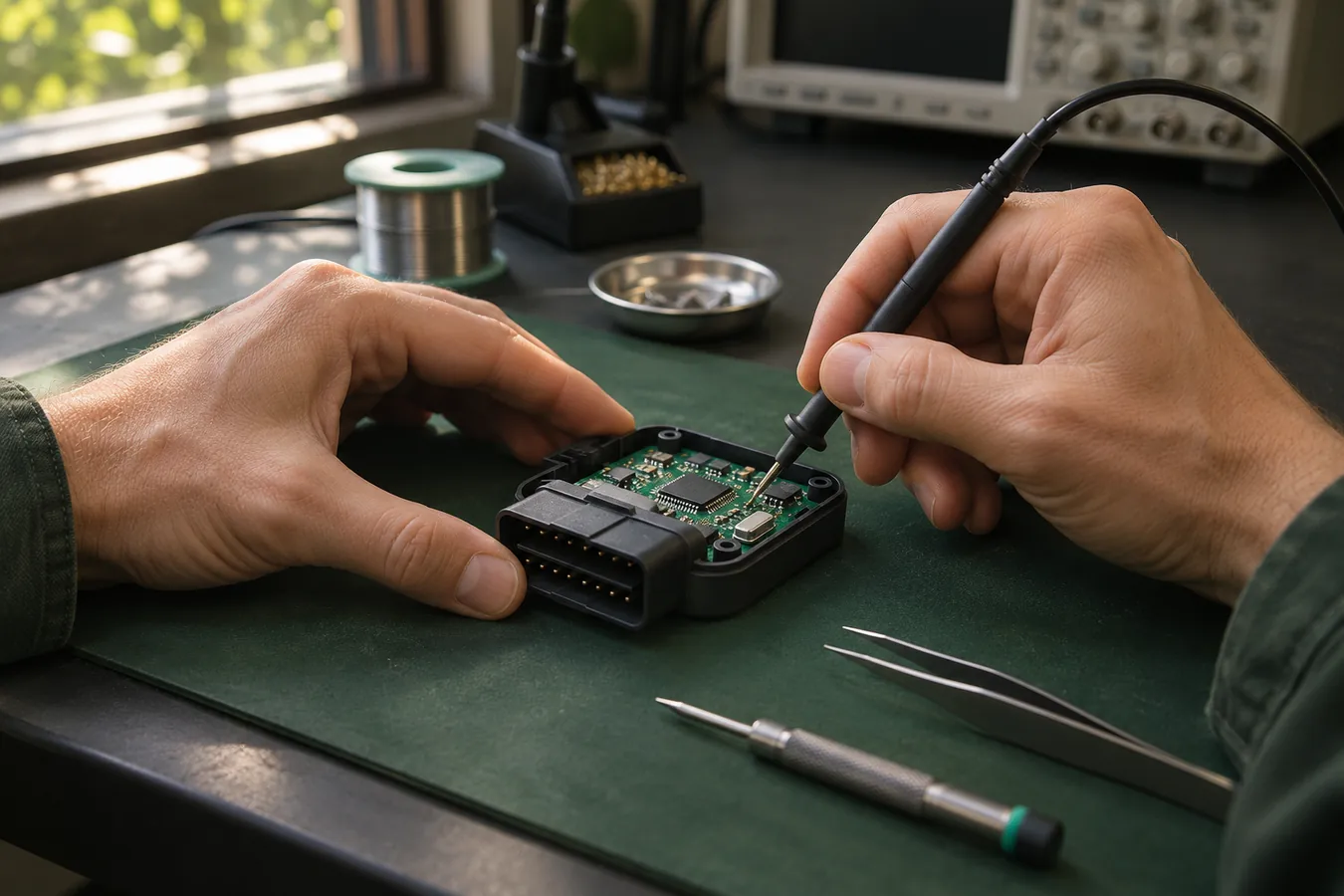
Illustration of an engineer inspecting a compact vehicle interface at a workbench

Hardware partnerships

From a drive log to a care plan.

We’re looking for a hardware partner to help car owners understand what changes between service visits. The first test starts with one OBD device, one iPhone and one vehicle.

Illustrative workshop scene

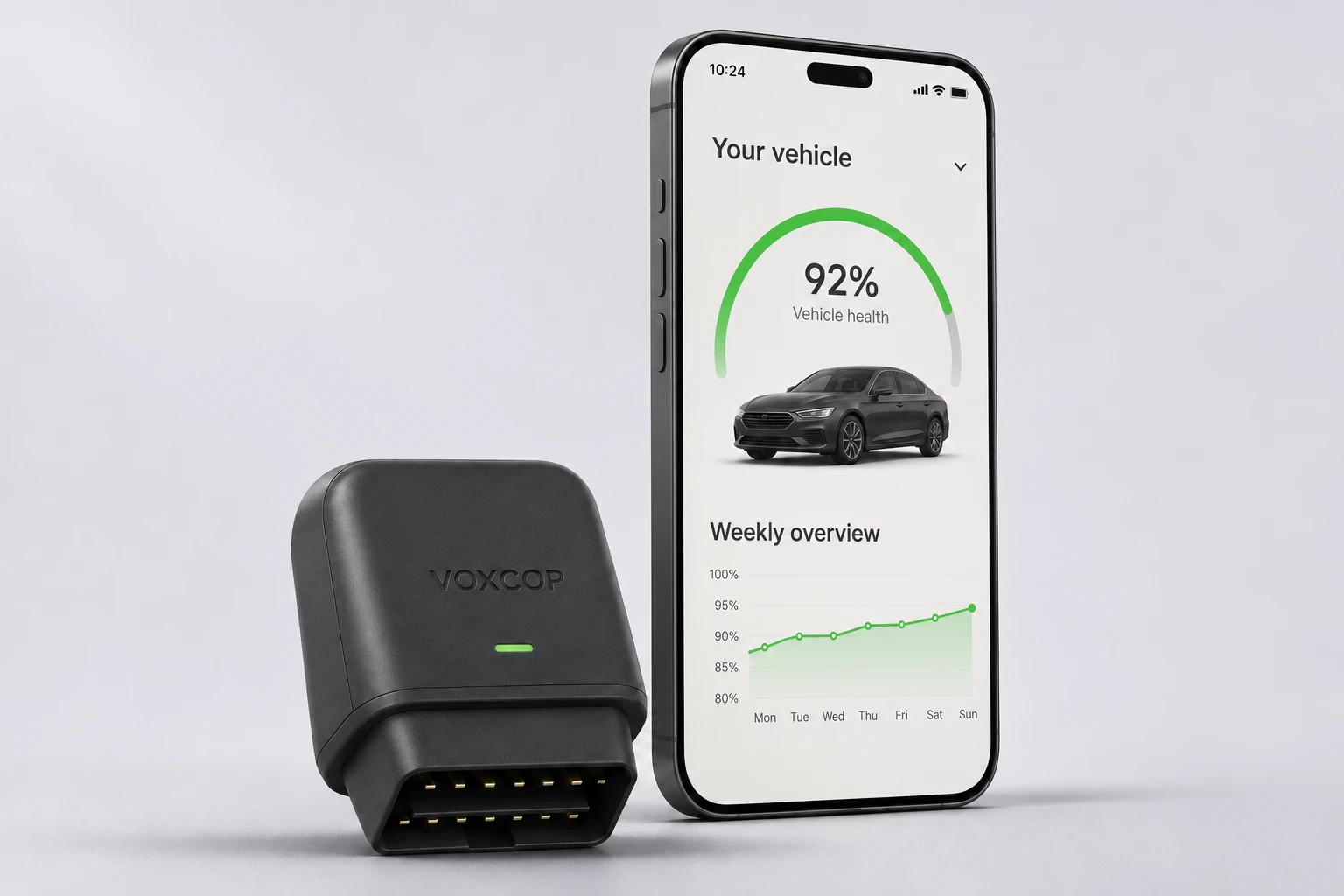
Concept rendering of the proposed VOXCOP device beside a phone displaying a sample health report
VOXCOP hardware & app concept

The hardware starting point

A sample on the bench.

The project already has a CAN Opener sample that can read vehicle data. CAN Opener SE is our first integration target. Its published specs describe two channels for Classical CAN and CAN FD, and its Bluetooth Low Energy protocol is documented for independent app developers.

We’ll record our sample’s revision and firmware, then check which signals the test vehicle actually exposes. Commercial supply and licensing terms are open for discussion.

Proposed division of work

What each side brings.

Hardware partner

Device and firmware
Supply test units, identify revisions and help resolve connection or signal issues.
Operating limits
Share channel routing, expected power use and the conditions under which data can be captured reliably.
Path to supply
Review minimum orders, quality checks, warranty, branding rights and lead times for a pilot batch.

VOXCOP

App and data handling
Build pairing and sync, decode supported signals and check units, timestamps and gaps.
Vehicle health reports
Connect confirmed service entries to comparable trips. Check which test vehicles expose original oil-life or numerical oil-pressure readings, then validate units and sensor behavior before issuing an alert. Explore the proposed alert logic.
Customer experience
Recruit pilot drivers, learn which recommendations help and measure the cost of delivering the service.

Joint validation plan

One car.
One report.

The first milestone is a report a technician can trace back to a drive. Each stage gives us evidence for the next decision.

Prove the first connection

Pair the sample to an iPhone in a North American gasoline or hybrid vehicle. Collect supported readings, decode and upload them, then produce a cloud report that points back to the observations.

Deliverable A repeatable drive log and a report showing the vehicle, firmware, units, timestamps and gaps. Start with road speed and RPM to measure stopped engine-running time. Add fuel economy if fuel rate is available. Include knock control only after verifying the model-specific reading.

Learn from a small fleet

Try additional vehicles and routes. Record signal coverage, background Bluetooth behavior, reconnection, parked power draw and what drivers learn from their reports.

Deliverable A tested compatibility list, an issue log and the estimated cost of hardware, support and cloud analysis.

Prepare for crowdfunding

Demonstrate a working prototype, agree supply and licensing terms, and budget manufacturing, fulfillment, certification and support. Kickstarter is under consideration.

Deliverable A real prototype demonstration, confirmed supplier terms and a costed delivery plan.

Proposed business model

Hardware with a continuing service.

The device purchase would include basic connection and vehicle readings. An optional subscription would add longer-term AI analysis and periodic health reports. We’ll set pricing after hardware quotes, licensing and operating costs are validated.

Partner inquiries

Discuss a partnership.

Tell us which part of the first pilot your team can help with. We welcome inquiries about hardware supply, firmware, manufacturing, vehicle profiles and pilot investment.