
Vehicle health system
A health tracker
for your car.
Using more gas lately? Hearing the engine rev higher on your commute? Our OBD device and app concept follows changes across drives and shows you what to check next.
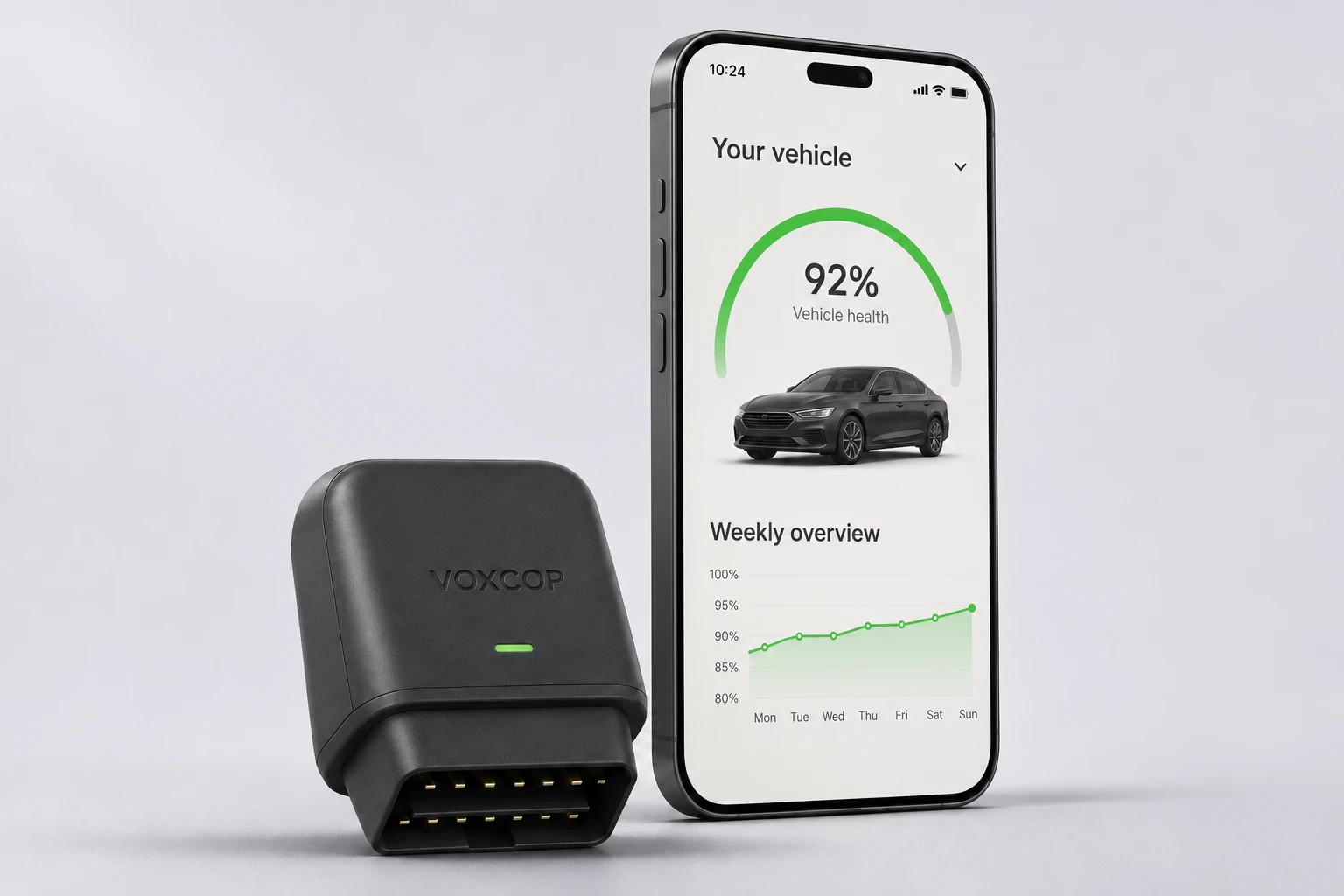 Product conceptOBD device + app
Concept imagery
The system
From a single plug
to a health history.
Every connected drive adds a little context. Follow a reading from the port under your dashboard to the explanation on your phone.
Four-week fuel note
Fewer milesper gallon.
- Week 1
- 34.0 MPG
- Week 4
- 29.6 MPG
Stopped engine-running time rose too. Compare a similar commute to see if the pattern holds.
Connect the device
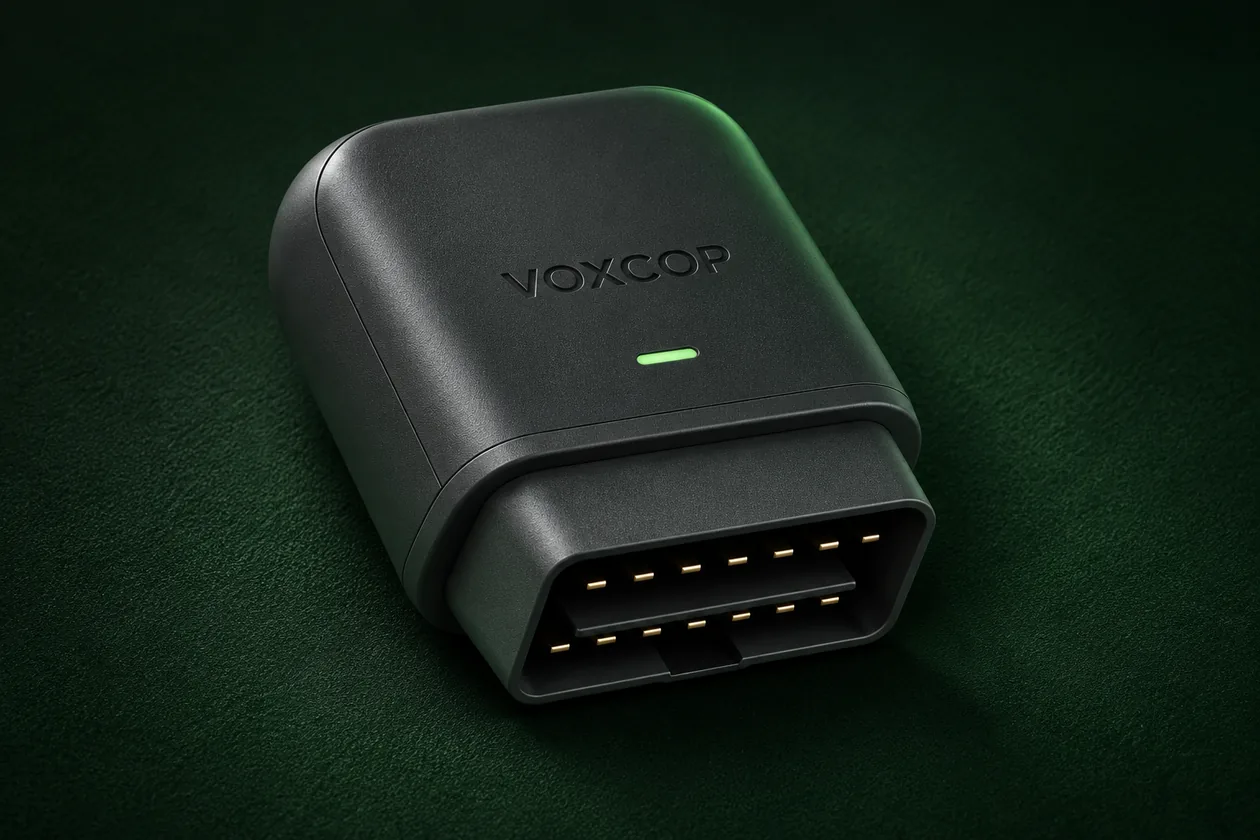
The OBD-II port is where a technician plugs in a scan tool. Our first hardware candidate, the CAN Opener SE, can read two CAN channels there. Which signals are accessible depends on the car.
Classical CAN & CAN FDBring the drive to your phone
In the planned app, Bluetooth carries supported readings to your iPhone. The app groups them by trip and syncs them when it has an internet connection.
OBD device · Bluetooth · iPhoneSee what changed
The planned cloud service checks which readings are present and compares trips over time. An AI explanation could then connect a change in fuel use with time spent stopped, show the evidence, and suggest what to check.
Read the fuel reportInteractive app demo
What can your drives
tell you?
Choose a question about one gasoline sedan. Explore 28 simulated drives, or open the service journal for oil-change timing, before-and-after fuel economy and early warnings.
This gasoline sedan covered 286 simulated miles in four weeks. Its journal compares fuel used per mile, minutes stopped with the engine running, engine speed on comparable stretches, coolant temperature and timing corrections when a vehicle-specific knock signal is available.
Simulated vehicle dataConcept app · North American gasoline sedan
Living with VOXCOP
A health record
you can use.
Did our fuel economy change after service?
The service wagon’s fuel economy jumped from 27.4 to 33.5 MPG after its recorded oil change. Two highway drives also entered the sample. Compare only the same commute and the difference shrinks to 0.3 MPG.
Try the before-and-after comparisonWhat did the engine computer do?
On some cars, a model-specific reading shows when the engine computer pulls back spark timing in response to its knock sensor. Our sample only has that reading from week three onward. Take the recorded corrections and any symptoms to a technician for interpretation.
See the knock-control exampleWhere did the extra fuel go?
The sample sedan went from 34.0 to 29.6 miles per US gallon. Time spent stopped with the engine running also rose from two to five minutes per drive. Traffic is one possibility. Compare a familiar route before deciding whether the car needs attention.
Compare stopped time by weekDoes higher RPM deserve a closer look?
Engine speed usually rises when a car accelerates. This comparison uses only warmed-up, steady stretches at 45–50 mph. The sample rose from 1,740 to 1,930 rpm between weeks one and four. Gear, road grade and load would help explain the difference.
Read the RPM comparisonDevelopment roadmap
The road to a real pilot.
We’re starting with North American gasoline and hybrid cars. Each stage answers a question we need to settle before launch.
- Now
Share the concept
Explore the simulated journal and define a first integration with a hardware supplier.
- Next
Prove one car
Pair a sample device with an iPhone and trace a decoded reading all the way to a report.
- Pilot
Drive it for weeks
Test signal coverage, Bluetooth reconnection, parking power draw and the value of the care notes.
- After validation
Prepare for Kickstarter
Show a working prototype and confirm licensing, supply costs and the delivery budget.
Owner questions
Before you
plug in.
What would come with the hardware?
We plan to include connection, supported readings and basic trip history with the device. An optional subscription would add longer-term analysis, AI explanations and periodic health reports. Pricing will follow hardware and pilot testing.
Will VOXCOP work with my car?
Our first target is North American gasoline and hybrid vehicles. OBD pins, firmware and decoding profiles determine what each car can share. We’ll publish a supported-vehicle list after testing.
Can it diagnose a repair or tell me when to service my car?
The goal is to surface changes, explain the evidence and suggest when to discuss an observation with a technician. Follow your vehicle’s warning lights and service schedule. A repair decision may need an inspection.
What could a check-engine light add to my journal?
Suppose the car reports P0302, a misfire detected in cylinder two. If the car stored a snapshot with that code, the planned app could show engine speed, temperature and load when it happened. A technician could use those details to narrow the investigation before choosing a repair. How diagnostic snapshots work
Which signals does my car need to share?
Fuel economy needs usable fuel and distance data. Stopped engine-running time uses road speed together with engine activity. Knock control needs a verified signal for that vehicle and firmware. When a reading is missing, the journal leaves a gap. Common OBD readings
What if my phone disconnects?
The planned connection runs through Bluetooth on your phone. The pilot will test background collection, reconnection and parked power use. The sample report shows how we intend to describe gaps in coverage.
Can I order one or back a Kickstarter today?
VOXCOP is in development. The waitlist is open for updates. A potential Kickstarter campaign is in preparation, with a launch decision after prototype and supply validation.
Early access
What do
you drive?
Get development updates and hear about future pilot opportunities. Share your car if you’d like us to consider it for testing.